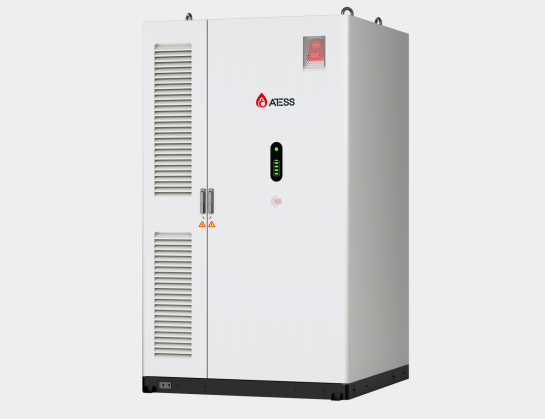
The power conversion system (PCS) is a critical interface between the battery bank and the power grid, responsible for AC/DC conversion, precise power control, and intelligent charge/discharge management.
As the component that manages energy flow in an energy storage system, its electrical performance and compliance with standards directly determine the operational efficiency and safety of the entire system.
Importance of Compliance
1. Grid Safety and Network Stability
Non-compliant power conversion equipment can introduce unnecessary risks to public electrical infrastructure. If a PCS fails to meet local grid connection requirements, it may generate excessive harmonic distortion, voltage fluctuation, phase imbalance, or unstable active and reactive power output.
In abnormal grid conditions, unverified protection logic may also affect the system's ability to disconnect, isolate, or respond correctly to voltage and frequency disturbances. This can increase stress on local distribution networks and create operational risks for nearby industrial or commercial loads.
2. Safety Protection
Energy storage projects often operate in high-voltage and high-current environments, where equipment reliability is essential.
Compliant PCS products are tested against defined safety and performance requirements to verify insulation performance, anti-islanding protection, fault response, and thermal management under specified operating conditions.
When short circuits, overvoltage, overcurrent, or abnormal temperature rise occur, standard-compliant protection logic helps trigger timely protective actions. This improves operational predictability, reduces electrical and fire-related risks, and helps protect maintenance personnel, battery assets, and surrounding equipment.
3. Market Access and Commercial Value Creation
Regulatory compliance has a direct impact on whether an energy storage project can be approved and connected in a target market.
In many regions, certifications such as UL, CE, CQC, or other local grid-code approvals are required for formal grid connection, incentive qualification, or project acceptance.
Compliance can also support access to higher-value energy applications. Certified bidirectional PCS units are better positioned to meet the technical requirements of Frequency Control Ancillary Services (FCAS), Virtual Power Plant (VPP) integration, and automated Demand Response (DR) programs.
How Major Markets Structure Their Requirements
Compliance frameworks vary by region, with each market placing emphasis on different technical priorities.
1. North America[1][2]
In the North American market, UL 1741 remains a key certification standard. UL 1741 SA introduced functions such as voltage and frequency ride-through, while UL 1741 SB aligns testing more closely with IEEE 1547-2018, including communication and interoperability requirements.
States such as California and Hawaii have adopted advanced inverter requirements for new interconnection applications, and similar expectations are expanding in other jurisdictions.
These certifications are often considered alongside NFPA 855, which governs site-level safety requirements for stationary energy storage systems.
2. Europe[3][4]
Europe follows a more fragmented but well-established compliance structure.
While IEC and EN standards provide the technical foundation, grid connection rules are often implemented through national requirements. EN 50549 is widely referenced for generating plants connected to distribution networks, while Germany uses requirements such as VDE-AR-N 4105 for low-voltage grid connection.
For a battery inverter used in Europe, CE marking alone is not always sufficient for grid connection. Project developers usually need to verify both product safety compliance and local grid-code conformity.
3. Australia[5][6]
Australia has one of the world's highest rooftop solar penetration rates, which has contributed to strict grid-connection requirements for inverter-based systems. AS/NZS 4777.2 defines performance and behavior requirements for inverters connected to low-voltage systems.
The Clean Energy Council Approved Products List is also an important reference for installers, retailers, and project owners. Products that do not meet the updated standard requirements may be removed from the approved list, which can affect project eligibility and installation approval.
4. China[7][8][9]
Across Asia, PCS compliance is determined at the national level, with requirements shaped by local grid rules, project types, and approval procedures.
China commonly evaluates energy storage converters against GB/T 34120 and GB/T 34133, which address PCS technical performance and testing requirements.
For Japan, low-voltage grid-connected equipment is often assessed through schemes such as JET, which references JEAC 9701. However, the applicable requirements may still differ by voltage level and utility territory.
South Korea applies separate compliance routes to ESS PCS and PV inverters. KC certification is relevant to ESS PCS, while KS standards are more commonly associated with PV inverter products.
How ATESS Supports Global Energy Storage Deployment
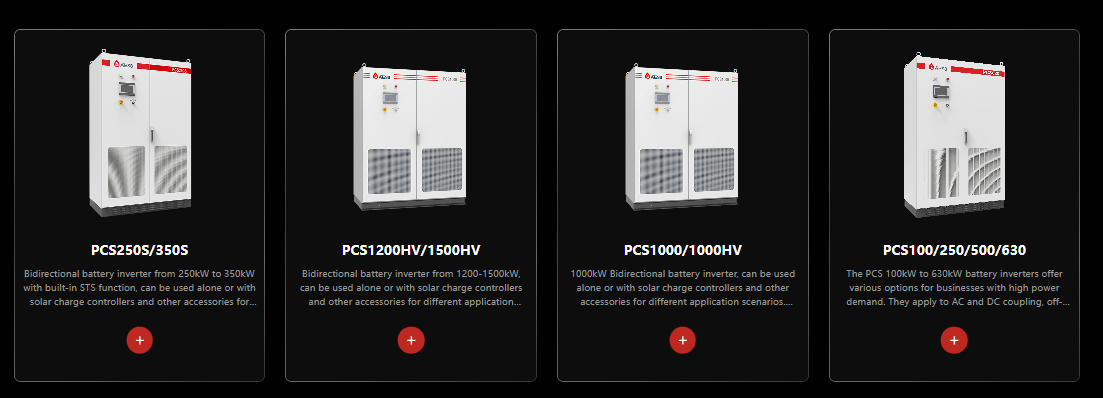
Our PCS product portfolio covers a power range from 100kW to 1500kW and is designed for different operating scenarios, including grid-connected storage, off-grid systems, microgrids, backup power, and hybrid renewable energy systems.
1. Broad Certification Coverage
Developed with international market requirements in mind, our PCS products are certified to standards and grid-connection requirements such as UL 1741, AS/NZS 4777.2, EN 50549, CE, and G99, depending on the specific model and project configuration. This can reduce project approval uncertainty and support faster technical evaluation during early-stage project design.
2. Customization for Complex Grid Environments
We support customized firmware and parameter adaptation for projects that involve non-standard operating conditions. This includes deployments in microgrids, weak-grid environments, and sites with specific dispatch or islanding requirements.
In these scenarios, grid-connection compliance often depends on how the equipment is configured rather than certification alone. Our firmware-level adaptation helps meet project-specific grid requirements and supports more reliable commissioning in complex environments.
3. Communication and EMS Integration
Our PCS products support standard industrial communication protocols, enabling connection to Energy Management Systems and grid dispatch platforms. This allows project developers and system integrators to integrate our PCS products into broader energy management architectures with reduced integration complexity.
Conclusion
Different markets use different standards, but the underlying goal is consistent: safe conversion, stable grid interaction, reliable protection, and predictable response to control commands.
For global projects, the right PCS should be evaluated not only by power rating and efficiency, but also by certification readiness, communication capability, firmware flexibility, and field integration support.
ATESS provides PCS solutions designed for these requirements, supporting customers through certification preparation, firmware configuration, and system integration across international markets.
Reference
[1]. Available at:
https://ul.com/services/ul-1741
[2]. Available at:
https://www.nfpa.org/codes-and-standards/nfpa-855
[3]. Available at:
https://www.cenelec.eu
[4]. Available at:
https://www.tuvsud.com/en/services/testing/grid-code-testing
[5]. Available at:
https://www.standards.org.au
[6]. Available at:
https://cleanenergycouncil.org.au/industry-programs/products-program/inverters/standards-change
[7]. Available at:
https://std.samr.gov.cn
[8]. Available at:
https://www.jet.or.jp/en/products/protection/index.html
[9]. Available at:
https://www.kats.go.kr