The long-term profitability of an EV charging asset depends heavily on where it sits.
A poorly chosen location leads to underused hardware and stretched payback periods, while a strong site keeps utilization high from day one. For operators and investors, picking the right site comes down to knowing what to look for.
This article walks through 5 site selection factors for commercial EV charging solutions, helping stakeholders cut risk and improve returns in a fast-growing market.
Power Grid Access and Capacity
Electrical infrastructure is the primary hurdle. Failing to audit grid capacity early routinely blows project budgets before the first charger even goes live.
1. Grid Capacity Headroom
Evaluate existing distribution grid capacity to confirm whether the local transformer has enough headroom. If a grid upgrade is required, capital costs and regulatory approval timelines vary widely by municipality, sometimes delaying revenue.
2. Connection Proximity
The distance from the station to the nearest grid connection point also shapes the installation budget, since high-voltage cabling length drives both materials and civil works like trenching and conduit placement.
3. Electricity Tariff Impact
Beyond installation, two tariff factors drive day-to-day economics.
l Local time-of-use electricity prices determine whether battery storage makes financial sense. If the gap between peak and off-peak rates is wide enough, storage can meaningfully reduce electricity bills.
l Some utilities charge demand fees based on peak power usage. These fees can quietly eat into profits at high-power DC EV charging sites. Smart load balancing or battery buffering can help manage this issue.
Review these factors before signing a lease. This will help you avoid costly surprises when installing a commercial EV charging station.
Traffic Flow and Accessibility
Traffic density and site accessibility determine how often a charging station gets used.
1. Traffic Data Segmentation
Start by pulling average daily traffic data for surrounding roads. Separate local commuters from through-traffic, since each group needs a different charging speed.
2. Ingress & Egress Ergonomics
Drivers will avoid a site that requires complicated U-turns or navigating through congested intersections. A site with a dedicated deceleration lane or a direct slip road has a major safety and convenience advantage.
3. Visual Prominence
Roadside visibility, signage clearance, and unobstructed sightlines all matter more than developers expect, particularly for stations that depend on impulse stops rather than planned visits.
Target Customers and Use Cases
Understanding local EV adoption patterns prevents misaligned investments. To maximize infrastructure utilization, station capabilities should align with specific driver behaviors and localized dwell times.
1. Target User Cohorts
Charging stations should cater to distinct user groups, including ride-hailing fleets, private owners, logistics vehicles, and transit buses. While commercial fleets prioritize maximum uptime and predictable pricing, private owners look for convenience and premium onsite amenities.
2. Localized Utilization Cycles
The surrounding urban fabric dictates daily demand peaks. For instance, commercial business districts typically generate intense daytime demand, whereas residential neighborhoods experience overnight utilization spikes.
3. Infrastructure Matching
High-speed DC EV charging units deliver the best ROI at highway service plazas, logistics corridors, and transit hubs where drivers require a rapid top-up.
An AC EV charging station is ideal for destinations where vehicles remain parked for extended periods, such as corporate office parks, apartment complexes, shopping centers, and hotels.
4. Data-Driven Scalability
Before deploying capital, always analyze current EV registration data within a three-kilometer radius and model future growth rates. This baseline data ensures the facility meets immediate local demand while remaining easy to scale.
Competitive Landscape
An effective deployment strategy requires an audit of the existing charging network.
Mapping operational stations within a five-kilometer radius helps identify market saturation and unserved gaps. It's necessary to assess the number of plugs, power outputs, utilization rates, pricing strategies, and service fees.
If a market is dense, success depends on differentiation.
l This can be achieved by deploying ultra-fast hardware, leveraging onsite renewable energy to reduce overhead, or offering superior amenities like clean restrooms and comfortable lounges.
l Implementing advanced commercial EV charging solutions featuring smart load management allows operators to offer competitive pricing while maintaining healthy margins.
Land Cost and Lease Terms
The financial viability of a charging hub is tied to land costs and lease terms.
1. Rent and Lease Period
Look beyond the headline rate per square meter, and factor in escalation clauses, parking space allocation, and any shared common-area fees.
Because the payback period for high-capacity hardware typically spans three to seven years, the lease should comfortably cover that horizon, protecting the operator from losing the site before the investment pays back.
2. Agreements
Lease agreements must also address utility infrastructure rights. The tenant should have the right to apply for power capacity upgrades, with clear landlord cooperation built into the contract.
The property owner needs to grant routing access for cables and equipment placement. Without these terms in place, an EV charging station installation can stall after construction has already begun and money has been spent.
Commercial EV Charging Solutions from ATESS
At ATESS, we support operators across every scenario above with a complete lineup of EV charging solutions for commercial properties.
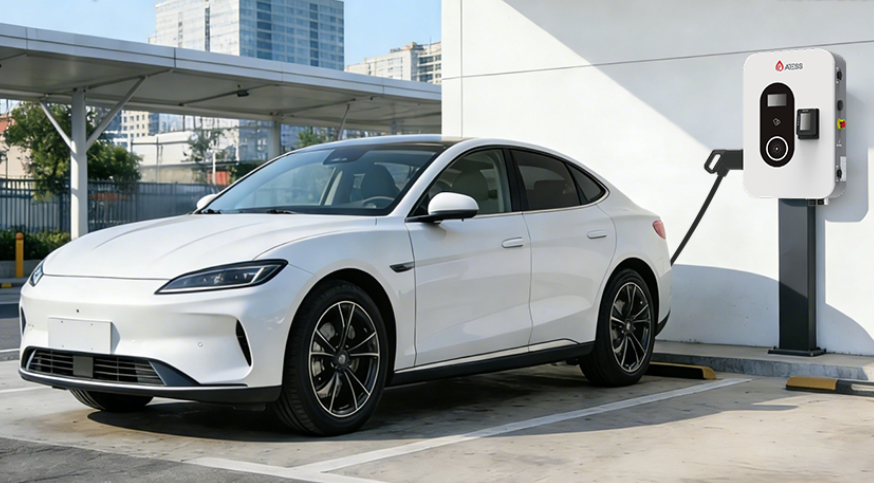
l The NANO EVA-07/11/22S-S is a compact wall-mounted AC EV charging station for office parks, malls, hotels, and other dwell-time venues, and its quick installation keeps EV charging station installation costs low.
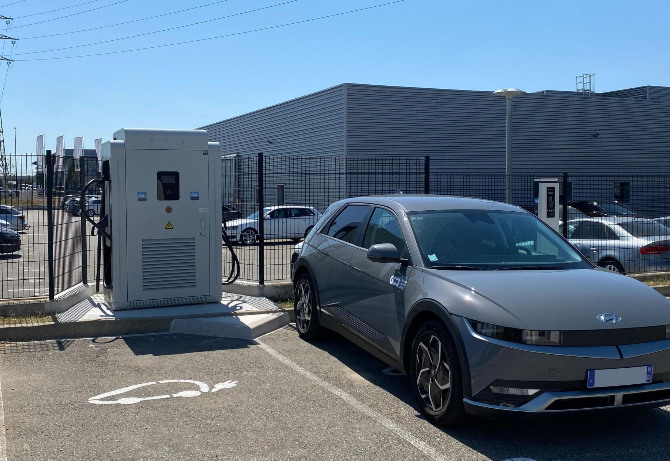
l The EVD-40S/D is a 40 kW DC EV charging unit built for transit hubs and commercial parking, with dual-gun output that lets two vehicles charge simultaneously.
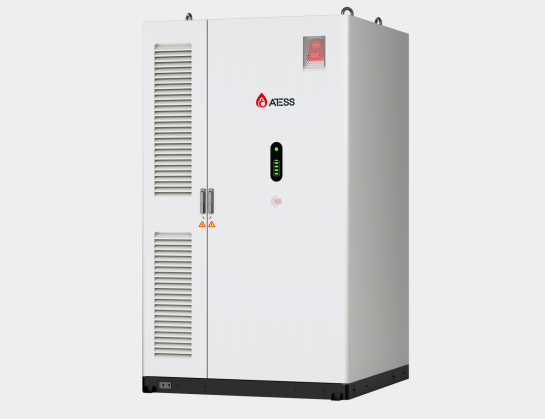
l For larger sites serving mixed driver types, the EVC-AC22S/DC200D-X and EVC-AC44S/DC200D-X combo cabinets bundle both AC and DC outputs in a single footprint.
Conclusion
Selecting the right site for an EV charging station is a disciplined process that balances grid access, traffic patterns, customer demographics, competition, and lease terms.
When paired with reliable hardware, smart site selection transforms a charging station from a simple utility into a profitable, high-utilization asset that serves both drivers and investors well for years to come. ATESS provides the hardware and technical support to bring your project to life.