As electric vehicle adoption skyrockets globally, the demand for charging infrastructure is growing in lockstep. This raises a compelling question: can a pure solar EV charger handle the load independently?
Theoretically, it is possible. However, relying solely on photovoltaics without battery storage or utility integration struggles to meet the reliability standards of commercial-grade charging operations.
Challenges of Pure Solar Charging
While harnessing the sun directly seems ideal, a standalone solar-powered EV charger faces significant operational hurdles.
1. Intermittent Energy Production
Photovoltaic generation is strictly limited to daylight hours, leaving nighttime fleet requirements completely unfulfilled. Even during the day, overcast skies, passing clouds, or sudden rainstorms can cause energy yields to plummet rapidly, making continuous, uninterrupted service virtually impossible.
2. Inadequate Instantaneous Power
High-speed commercial EV chargers draw substantial bursts of power, frequently ranging from tens to hundreds of kilowatts in a matter of seconds. Solar output, conversely, fluctuates with weather and light conditions.
Without a physical buffering mechanism in place, these erratic voltage shifts prevent fast-charging sessions from even initiating. In worst-case scenarios, the lack of stability can lead to interrupted sessions or trigger the charger's protective shutdown.
3. Space Limitations
To properly support a single 150kW rapid output unit, an operator theoretically needs roughly 1,000 to 1,500 square meters of high-efficiency solar panels. Most sites planning a commercial EV charging station installation simply lack the real estate required to host such an extensive array, especially in dense urban environments or tightly packed retail parking lots.
Necessity of Battery Energy Storage Systems (BESS)
To achieve true grid independence or reliable hybrid operation, incorporating a BESS is non-negotiable.
1. Energy Buffer
Batteries serve as the vital core of the setup, effectively bridging the gap between unpredictable generation and high-demand consumption.
They capture and hold electricity during peak midday sunlight, then release it in concentrated, high-power bursts the moment a vehicle plugs in.
This mechanism guarantees that commercial EV chargers always have the steady, reliable current they need to function optimally, regardless of weather conditions at the time.
2. Load Shifting
Storage allows facility operators to harvest sunshine all afternoon and dispense that stored clean energy to overnight delivery fleets or employee vehicles charging after hours.
This decoupling of generation time from consumption time is what transforms a solar-powered EV charger from a daylight-only convenience into a genuinely round-the-clock charging resource.
3. Peak Demand Management
When several commercial EV chargers are running simultaneously, which is a routine occurrence at busy logistics hubs or public charging plazas during peak hours, the combined draw can spike dramatically within seconds.
A well-configured BESS absorbs that surge, intelligently distributing stored power across active sessions rather than pulling everything from the grid at once.
Beyond protecting system stability, this capability directly reduces demand charges, which often account for a disproportionately large share of a commercial site's monthly electricity bill.
System Architecture Options
There are two primary configurations worth considering, depending on site conditions and grid access.
1. Off-Grid
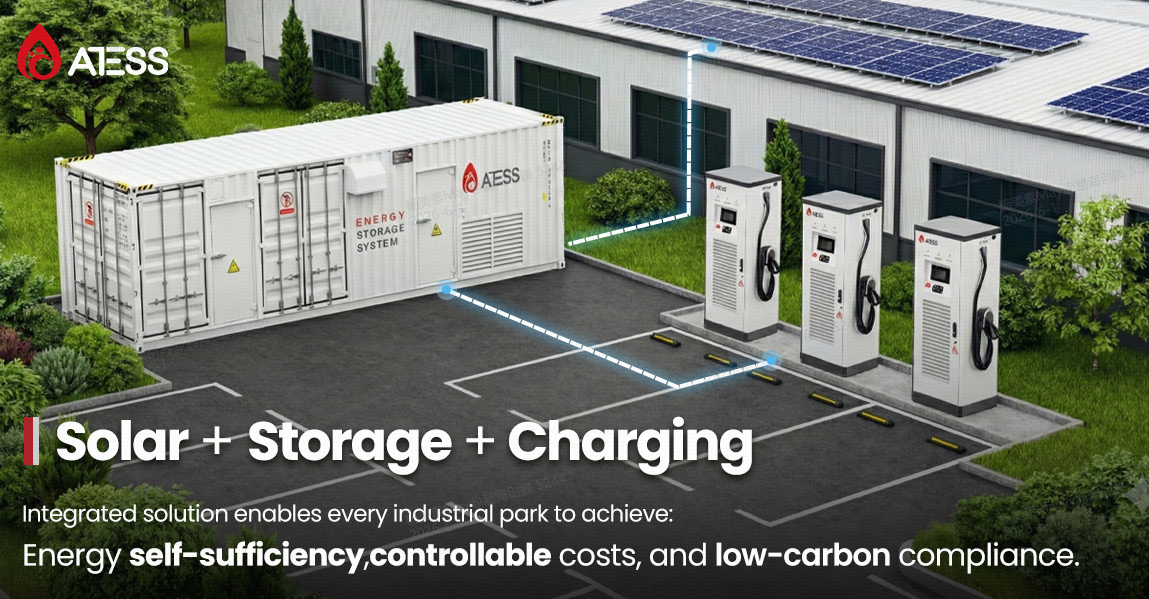
Off-grid solar-storage-charging systems combine PV panels, a battery bank, and smart EV chargers into a fully self-contained unit.
This setup is suitable for remote locations, rural highways, or specialized industrial zones where utility connections are either unavailable or cost-prohibitive.
Energy management is handled entirely on-site, with the battery acting as the central dispatch point.
2. On-Grid
Grid-tied solar-storage systems use solar and battery as the primary supply while maintaining a grid connection as backup. Surplus generation can be stored or exported.
This hybrid approach suits most commercial EV charging stations in urban or suburban environments, offering both cost savings and reliability.
Crucial Decision Factors
Getting the system sizing right requires working through a few site-specific variables.
1. Available Physical Footprint
It determines how much solar capacity is actually installable. Run the numbers on daily vehicle throughput, average state-of-charge on arrival, and target departure charge level; then work backward to the panel area needed.
2. Charging Scenario
Understanding the specific daily use case is equally important. A corporate office campus where employees park for eight hours might only require standard AC units.
In contrast, a busy logistics hub necessitates high-speed DC equipment for rapid turnarounds. Those exploring the market and looking at commercial EV charging stations for sale must match the hardware specifications to their exact operational times.
3. System Intelligence
Finally, intelligent oversight brings the entire ecosystem together seamlessly. Implementing a dedicated EMS is critical. This software coordinates the real-time balance between PV generation limits, battery status, and the immediate draw from smart EV chargers, drawing on predictive algorithms to maximize overall efficiency.
ATESS Integrated Solutions
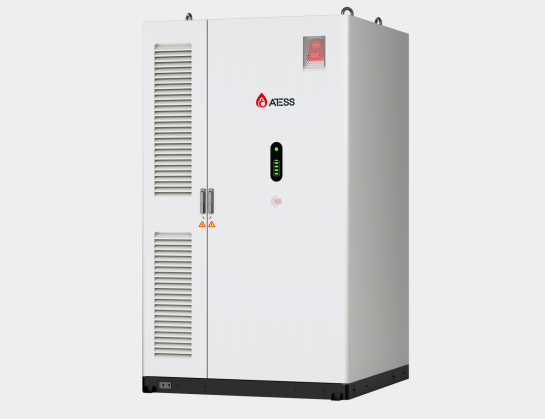
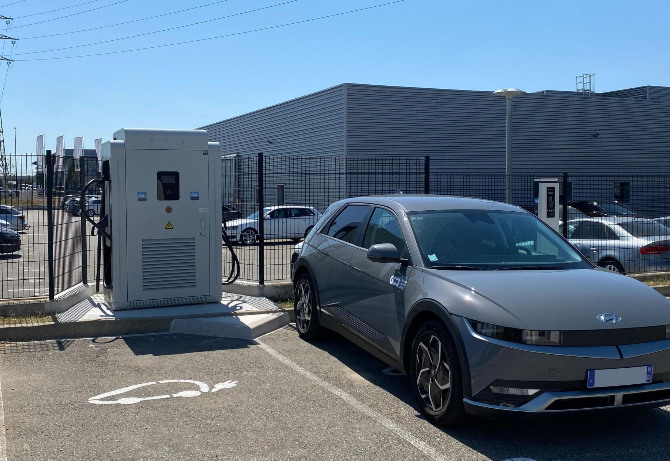
ATESS has developed a hardware ecosystem specifically designed to close the gap between solar generation variability and the reliability demands of commercial EV chargers.
l The NANO EVA Series charging units support bidirectional communication with energy management platforms, enabling dynamic load balancing across multiple commercial EV chargers on the same site.
l The HPS and PCS Series can handle the real-time coordination between PV input, battery state, and charger output, ensuring efficient energy flow regardless of generation conditions.
l The EnerStack battery platform offers modular capacity scaling, so operators can right-size storage for current demand and expand as the site grows.
Conclusion
Solar energy has a genuine role to play in powering commercial EV chargers, but only when paired with the right storage and control infrastructure.
A well-designed system doesn't just offset energy costs; it future-proofs your site against rising grid tariffs and growing fleet demand alike.
If you're evaluating options for a new commercial EV charging station installation or looking to upgrade an existing setup, ATESS offers the complete hardware stack to make solar-plus-storage charging work reliably at scale.
Get in touch with the team to discuss a configuration built around your site's specific requirements.