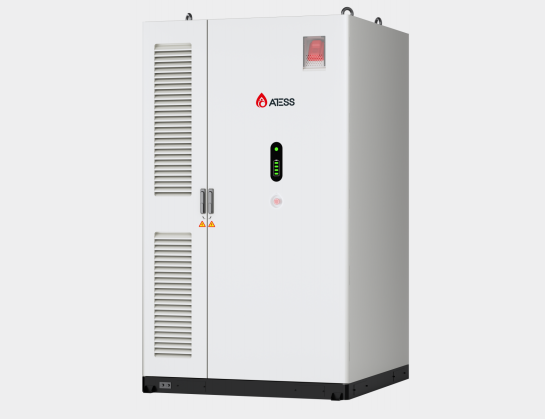
Renewable energy does not always produce electricity at the same time that people need it. Solar panels generate more power when sunlight is strong, while wind turbines depend on wind conditions.
Battery energy storage systems help solve this timing gap. They store electricity when renewable generation is high and release it when generation drops or demand increases.
How a Battery Storage System Works
A battery storage system can be understood as a large rechargeable energy bank. When solar panels or wind turbines produce more electricity than the site needs, part of that electricity can be directed into batteries instead of being left unused.
Charging does not mean the battery stores sunlight or wind directly. Renewable equipment first converts those natural resources into electricity. The storage system then receives electrical energy, keeps it in the battery, and delivers it later when the site needs power.
The stored electricity remains available until the site needs it. When renewable output falls, the battery releases power through the inverter so that electrical loads can continue to operate. This charging and discharging process allows energy to move from one period to another.
The system usually includes batteries, an inverter or power conversion unit, and control equipment. The batteries hold the energy, the inverter manages electrical conversion, and the controls decide when charging or discharging should happen.
How Solar Energy Can Be Stored
Solar generation often rises during the middle of the day. Without storage, the extra solar power may have limited value depending on the site and grid arrangement.
With storage, part of the daytime solar output can charge the battery. Later, when sunlight weakens or disappears, the stored energy can be used to support lighting, equipment, pumps, refrigeration, or other loads.
This is one reason battery energy storage systems are closely connected with solar projects. They help move solar energy from the time it is generated to the time it is actually needed.
How Wind Energy Can Be Stored
Wind power has a different production pattern. Wind may be stronger at night, during certain seasons, or at times when site demand is relatively low. This means wind generation can also exceed immediate electricity use.
A battery system can store part of that extra wind-generated electricity. When wind speed drops later, stored energy can be released to support the load.
Solar and wind can also work together in hybrid renewable projects. Solar may contribute more during sunny daytime hours, while wind may provide energy at different times. Storage gives the system another way to balance these changing sources.
Why Storage Matters for Renewable Energy
Renewable energy is variable by nature. Clouds can reduce solar production quickly, while wind output can change as weather conditions shift. Storage cannot create energy, but it can make available energy more useful by changing when it is delivered.
For commercial users, this can support higher renewable self-consumption. More of the electricity generated on site can be used locally instead of depending entirely on the grid or another backup source.
Storage can also support off-grid projects. Remote shops, rural workshops, agricultural operations, and construction sites may not have access to utility power. In these locations, batteries can hold renewable energy for use when solar or wind production is lower.
What Determines System Performance
Battery capacity is only one part of system design. The inverter rating, renewable generation size, operating hours, and load profile also need to match each other.
Commercial users should review when electricity is consumed, how much power is required, and how long stored energy may need to support the site. Motor starting loads, pumps, refrigeration, and other equipment can influence inverter selection.
Site conditions also matter. Solar resources, wind conditions, available installation space, and grid access can all change the suitable configuration. Careful planning helps the storage system match real operating needs instead of relying only on rated equipment values.
How Hybrid Inverters Support Small Commercial Projects
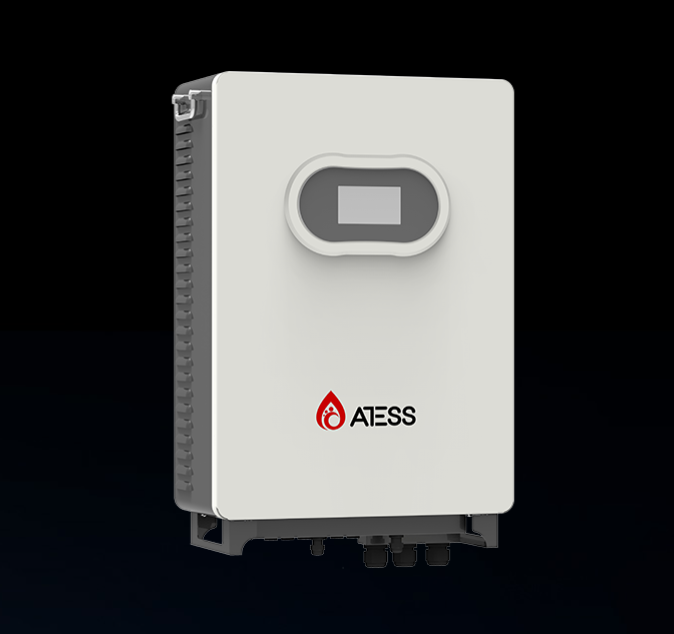
For small commercial projects, hybrid inverters can connect renewable generation, batteries, loads, and the grid within one system.
At ATESS, we provide the HPS15000TL, HPS20000TL, and HPS30000TL. These models form a 15–30 kW three-phase all-in-one hybrid inverter series for small commercial use.
The HPS series can work in off-grid scenarios through DC coupling, integrating solar energy and storage for locations such as small shops, rural workshops, agricultural operations, and construction sites without utility access.
Grid-connected applications can also use the 15 kW and 30 kW three-phase hybrid inverter options to increase renewable energy use and reduce dependence on conventional electricity under suitable operating conditions.
Connecting Storage With Real Energy Needs
The main value of battery energy storage systems is simple: they help renewable electricity remain useful after the moment it is generated. Solar energy produced at midday can support evening loads, while wind energy produced during stronger wind periods can be used later.
We see storage as part of a complete energy system rather than a separate component. ATESS applies this approach when supporting small commercial renewable projects with hybrid inverter solutions.
For businesses planning renewable energy systems, the practical question is not only how much energy can be generated. It is also when that energy is available, when it is needed, and how storage can connect those two periods.