World Energy Day is an opportunity for businesses to rethink how they generate, consume, and manage electricity. As energy costs fluctuate and sustainability becomes a growing priority, companies are seeking practical ways to improve energy efficiency while maintaining reliable operations. Solar power offers significant potential, but its generation does not always match electricity demand. An all-in-one BESS helps bridge this gap by storing energy for use when it is needed.
At ATESS, we provide solar energy storage and EV charging solutions designed to help businesses use clean energy more effectively. By combining renewable energy generation with battery storage and intelligent energy management, commercial and industrial users can improve energy utilization and gain greater control over their electricity consumption.
Why Businesses Need Smarter Energy Management
Solar power is increasingly used in factories, warehouses, office buildings, and other commercial facilities. However, solar generation typically peaks during daylight hours, while electricity demand may remain high in the evening or during periods of intensive production.
Without storage, surplus solar electricity may be exported to the grid or underutilized, depending on local regulations and system configuration. Meanwhile, businesses may need to purchase electricity when solar generation decreases.
Battery energy storage systems help address this mismatch. They store surplus electricity and release it when demand rises, allowing businesses to make better use of their renewable energy. This approach can also support peak-demand management and improve flexibility when electricity prices vary throughout the day.
How an All-in-One BESS Helps Businesses Use Clean Energy
An all-in-one BESS integrates essential energy storage components into a coordinated system, simplifying equipment integration and installation compared with assembling separate components.
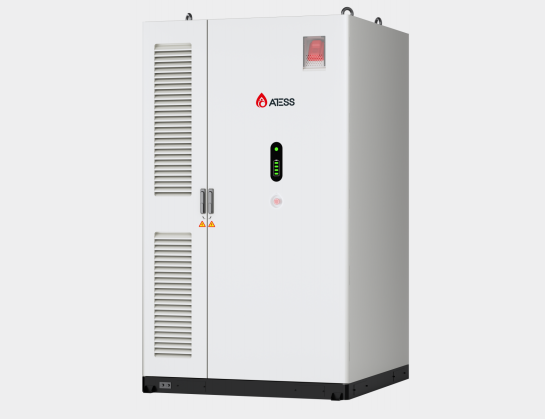
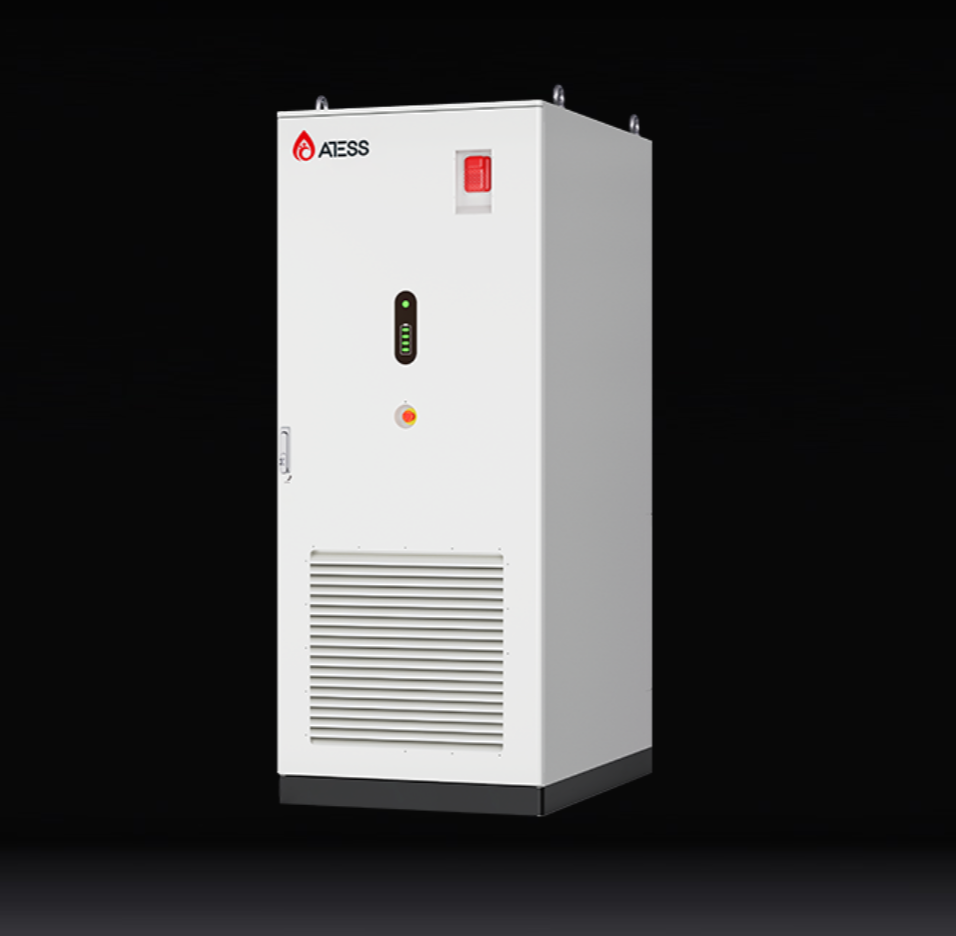
Our all-in-one BESS solutions integrate battery storage, a bidirectional power conversion system (PCS), an energy management system (EMS), thermal management, and fire safety functions within an integrated cabinet. Depending on the selected model and configuration, businesses can benefit from several energy management strategies.
1. Increase Solar Self-Consumption
When solar generation exceeds immediate electricity demand, a BESS can store the surplus energy for later use. Businesses can then draw on this stored electricity when solar output falls, reducing their reliance on grid electricity.
This is particularly useful for facilities with afternoon or evening demand. Actual savings depend on solar capacity, battery sizing, electricity consumption patterns, and local energy tariffs.
2. Reduce Peak Electricity Demand
Some commercial and industrial electricity tariffs include charges based on peak power demand. A properly configured BESS can discharge during high-demand periods, helping reduce the amount of electricity drawn from the grid.
This strategy, known as peak shaving, can help businesses manage electricity costs more effectively. Its financial benefits depend on tariff structures, load profiles, battery capacity, and system operating costs.
3. Support Flexible Energy Consumption
Businesses operating under time-of-use electricity tariffs may benefit from storing electricity when prices are lower and using it during more expensive periods. An EMS can coordinate charging and discharging according to electricity prices, renewable energy availability, and facility demand.
Before adopting this strategy, businesses should consider battery efficiency, degradation, and electricity price differences to determine whether the investment is economically viable.
4. Strengthen Power Resilience
Power interruptions can disrupt production and affect essential equipment. Depending on the model and configuration, an all-in-one BESS can support backup power and on-grid or off-grid operation.
For example, the ATESS MatrixOne IC261-400S has a rated output power of 125 kW and a battery capacity of 261 kWh. It integrates a static transfer switch (STS), with grid-to-backup switching specified at up to 10 milliseconds under supported operating conditions. The MatrixOne IC418-690/IC418-800 provides 215 kW of rated output power and 418 kWh of battery capacity, with a black-start function.
These specifications help businesses compare storage options against their power requirements. Actual backup performance depends on system design, connected loads, and installation conditions.
What Should Businesses Consider Before Investing?
Choosing an energy storage system requires more than comparing battery capacity. Businesses should review electricity bills, load profiles, solar generation, and future energy requirements to determine the appropriate power rating and storage capacity.
Safety and environmental conditions are equally important. Battery management, thermal management, fire protection, and enclosure protection should be assessed alongside applicable standards and installation requirements.
Compatibility also matters. The BESS should integrate effectively with existing photovoltaic systems, grid connections, and electrical infrastructure. Businesses should evaluate maintenance requirements, warranty conditions, scalability, and expected return on investment before making a decision.
A suitable system should reflect actual operating needs rather than simply maximize battery capacity.
Building a More Sustainable Future with ATESS
Founded in 2017, Shenzhen ATESS Power Technology Co., Ltd. provides solar energy storage and EV charging solutions for residential, commercial, and industrial applications. Our portfolio includes hybrid inverters, battery inverters, energy storage systems, and EV charging stations.
We believe the transition to clean energy requires practical solutions that address real operational challenges. Our all-in-one BESS solutions help businesses integrate energy storage into their power infrastructure and support strategies such as solar self-consumption, peak shaving, load shifting, and backup power, depending on the selected configuration.
On World Energy Day, businesses can take the opportunity to evaluate not only where their electricity comes from, but also how effectively they use it. Combining renewable generation, appropriately sized storage, and intelligent energy management can help companies improve energy efficiency and work toward their sustainability objectives.
Explore ATESS to learn more about our energy solutions and discover how battery storage can support your business's clean energy strategy.