Electric vehicle charging sites serve users with different parking times and travel needs. Some drivers stay for hours, while others want to recharge and leave quickly. This difference is one reason charging stations may install both AC and DC equipment instead of relying on one charging method.
For operators, the decision is also connected with site power, traffic, parking duration, and vehicle types. Understanding how AC and DC charging work helps businesses plan a charging layout that fits actual use.
How AC Charging Fits Longer Parking Periods
AC charging supplies alternating current to the vehicle, where the onboard charger converts it into direct current for the battery. Because the vehicle handles this conversion, charging speed depends partly on the capacity of its onboard charging system.
This approach is often suitable for locations where vehicles remain parked for longer periods. Offices, hotels, residential developments, shopping areas, and workplace parking can all provide enough dwell time for AC charging to be practical.
AC equipment can also support users who do not need to recover much energy within a short visit. For site operators, charging demand can be spread across longer periods instead of concentrating power use into short sessions.
When we plan charging projects, we look at parking duration, charger occupancy, and whether users are likely to return regularly. These factors help determine whether AC charging should form the larger share of a site.
Why DC Charging Serves Faster Turnaround
DC charging converts power before it reaches the vehicle battery, so it can support faster energy delivery than AC charging for compatible vehicles. This makes it useful for drivers with shorter parking windows.
Highway service areas, transport hubs, commercial charging sites, and busy urban locations often have users who want to continue their journeys quickly. In these cases, DC charging can reduce the time each vehicle occupies a charging space.
A public EV charging station may therefore use DC charging to serve drivers who arrive with lower battery levels or limited waiting time. Faster turnaround can also help operators manage locations where parking spaces are limited.
However, faster charging is not necessary for every user. Some drivers may stay longer, use nearby services, or charge during work or shopping. Mixed charging demand should be reviewed before equipment is selected.
Why Mixed Charging Sites Use Both Types
A combined charging site can serve more user groups without requiring every charging point to operate at the same power level. AC chargers can support longer stays, while DC chargers can handle users who need shorter charging sessions.
This arrangement can help businesses use site infrastructure more carefully. Not every vehicle needs the same charging speed, so a mixed layout allows operators to match charger type with actual parking behavior.
For example, a retail or commercial site may have customers who stay for one or two hours and others who stop briefly. A combination of charging options gives both groups a suitable way to recharge.
We also consider future changes in vehicle mix. As more EV models enter a market, charging requirements may become more varied. Supporting different charging methods can make a site more adaptable.
What Public Charging Operators Need to Review
Before installing equipment, operators should review expected vehicle volume, average dwell time, available electrical capacity, and peak charging periods. These factors influence charger selection and the number of charging points needed.
Payment and access methods also matter in public environments. Some users may prefer app-based access, while others may rely on RFID or plug-and-charge functions. Clear charging processes can reduce confusion for unfamiliar users.
Communication options are another practical consideration. Connected charging equipment may need Ethernet, WiFi, or mobile communication depending on the location and management system. Operators should also review protection functions before commissioning.
For a public EV charging station, the goal is not simply to install more chargers. The charging mix should reflect how people use the location and how the site manages power, parking, and vehicle turnover.
How a Combo Charger Supports Mixed Demand
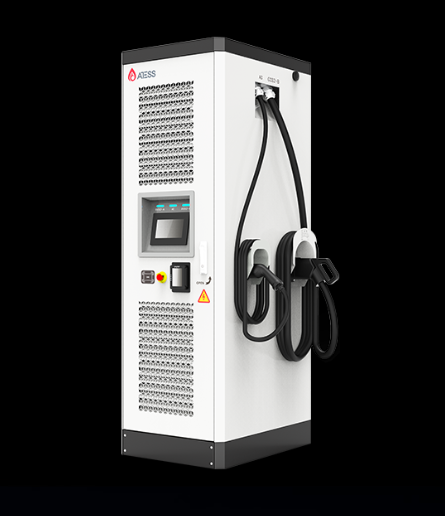
Once site operators identify the need for both AC and DC charging, a combined charger can simplify the layout. At ATESS, we offer the EVC-AC22S/DC200D-X and EVC-AC44S/DC200D-X for public charging applications.
These models combine one AC charging output with two DC charging outputs. The three output ports allow three vehicles to charge at the same time, supporting sites with different charging needs.
The units support APP, optional RFID, and Plug and Charge modes. They also support Ethernet, WiFi, and optional 4G communication. Protection functions include over-voltage, under-voltage, short-circuit, and earth leakage protection.
This configuration can be useful where operators want one unit to support several EV types and charging patterns. It offers a practical way to combine slower and faster charging access within the same site.
Choosing a Charging Mix Around Real Usage
There is no single charging method that fits every public location. AC charging works well when vehicles stay longer, while DC charging is more suitable when drivers need faster turnaround. Sites with mixed traffic often benefit from using both.
At ATESS, we view charger selection as part of a wider site-planning process. Operators should compare parking behavior, power availability, access methods, and expected traffic before choosing a final configuration.
A suitable charging mix can make the site easier to use and manage. By aligning AC and DC charging with real vehicle behavior, operators can support different drivers while keeping the charging arrangement practical for daily operation.