Large energy storage projects require more than choosing a battery capacity. System architecture affects installation, integration, expansion, and compatibility with existing power equipment. For engineering teams and project owners, AC coupling and DC coupling are two common approaches, but they solve different project needs.
The right choice depends on how the site is built, what generation assets are already installed, and how much flexibility may be needed later. We compare both approaches through three practical dimensions: installation method, suitable project type, and expansion convenience.
How the Two Architectures Are Installed
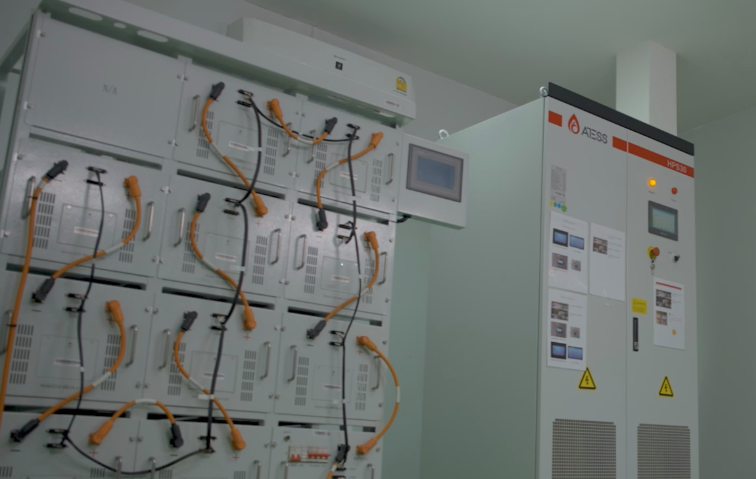
In an AC-coupled system, solar generation and battery storage connect through the AC side. The solar inverter converts PV power into AC, while a battery inverter or PCS manages charging and discharging between the battery and the AC bus. This structure can allow storage to be added without redesigning the whole solar power path.
DC coupling connects solar generation and battery storage more directly on the DC side. Power can move from the PV array into storage before conversion to AC. This can reduce conversion steps in some operating conditions, especially where solar energy is stored before being delivered to loads or the grid.
Installation conditions matter. Existing PV plants often make AC coupling easier because the original solar inverter can remain in place. New-build projects may have more freedom to consider DC coupling from the beginning, especially when the system is designed around combined solar and storage operation.
For a large grid scale battery storage project, engineers should review the existing electrical architecture before comparing equipment. Transformer arrangement, AC bus design, PV inverter capacity, battery voltage, PCS rating, and site protection strategy all influence which coupling method is more practical.
Which Project Types Fit Each Method
AC coupling can be useful where a project needs to integrate storage with existing generation equipment. It is also suitable for projects that combine several power sources, such as solar, the utility grid, and diesel generators. This makes the architecture practical for retrofit projects and complex microgrid environments.
DC coupling can suit projects where solar and storage are planned together from the beginning. It may also fit remote or off-grid locations where renewable generation is the main energy source. This arrangement can support energy capture before power is converted for AC loads.
Project purpose should guide the decision. Backup power, peak shaving, self-consumption, grid support, and frequency regulation can all place different demands on the system. We recommend defining the operating mode first instead of choosing a coupling method based only on equipment cost.
Site conditions also influence the choice. Factories, commercial districts, farms, and remote facilities may use storage differently. Load profile, outage risk, generator use, renewable energy availability, and grid quality should be reviewed before final system design.
Expansion Is Not the Same for Every Project
For AC-coupled systems, expansion can be straightforward because additional battery inverters and battery units can connect on the AC side without rebuilding the original PV circuit.
This flexibility can be useful in phased projects. The first installation may serve current demand, while later additions support new production lines, buildings, or charging loads. Expansion planning should still consider switchgear capacity, transformer limits, protection settings, and installation space.
DC-coupled systems can also be expanded, but changes may require closer coordination between PV input, battery configuration, DC equipment, and PCS design. Expansion is often easier when future capacity has already been considered during the initial engineering stage.
For buyers planning grid scale battery storage, expansion should be discussed early. Reserved capacity, modular equipment, communication architecture, and control strategy can reduce redesign work when the project grows.
How Our Large-Scale AC Coupling Solution Fits the Comparison
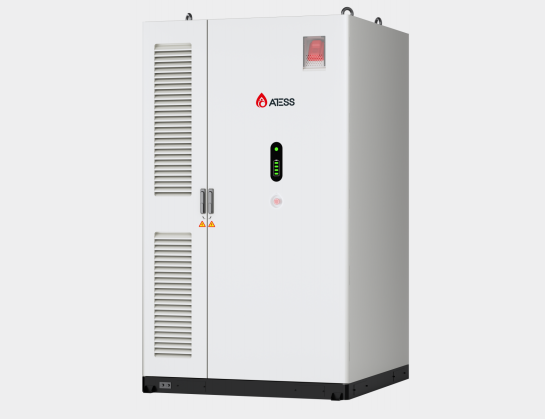
After the system architecture is clear, the equipment configuration can be matched to the project. ATESS provides an AC coupling solution for large-scale on-grid and off-grid applications. The solution is designed for backup power, grid support, peak shaving, grid and frequency regulation, and self-consumption.
The solution can work with battery inverter products in several power ranges, including PCS100/250/500/630, PCS1000/1000HV, and PCS1200HV/1500HV. The official solution information also states that the system supports a transfer to off-grid mode within 10 ms when the utility grid fails.
For projects that already include generation assets, the AC-coupled approach can simplify integration. The solution can also work with existing generators and renewable sources, while capacity can be expanded by adding battery units and inverters.
We use these characteristics when discussing project requirements with industrial and commercial customers. ATESS focuses on matching storage architecture, power conversion equipment, and control requirements to the actual site instead of treating one configuration as suitable for every project.
Choosing the Right Coupling Method
Neither AC coupling nor DC coupling is automatically the better option for every large project. In many cases, AC coupling fits retrofit projects, mixed power sources, and phased expansion. DC coupling can be practical for new solar-plus-storage systems and remote sites where direct renewable energy use is a major design goal.
Project teams should compare installation conditions, operating scenarios, and future expansion before making a final decision. With these three factors defined, the choice becomes easier to connect with technical requirements, project budget, and long-term operation.