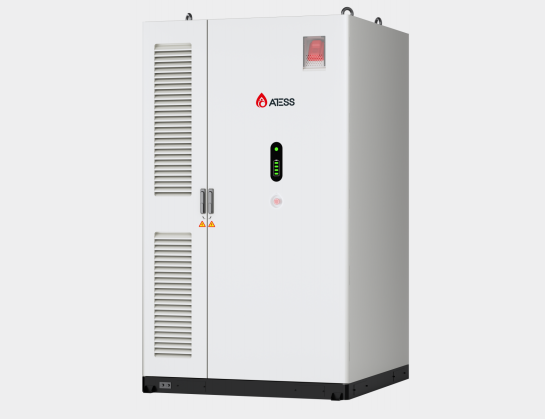
Many industrial power systems use both alternating current and direct current. Grid electricity normally enters a facility as AC power, while batteries and some DC loads operate on direct current. When these two parts need to work together, power conversion becomes an important part of the system design.
For project owners, integrators, and engineering teams, understanding this conversion process helps with equipment selection and system planning. A rectifier cabinet provides a practical way to convert AC electricity into DC electricity for applications such as energy storage, industrial power systems, and DC-coupled projects.
Why AC Power Needs to Be Converted
AC electricity changes direction periodically and is widely used for grid transmission and facility power distribution. Many industrial devices can work directly with AC, but battery systems store electrical energy in DC form. This difference creates the need for conversion equipment when grid power is used to charge batteries.
Rectification changes alternating current into direct current. Inside the conversion system, power electronic components control the electrical path and produce DC output that can be used by connected equipment. The exact system structure depends on voltage levels, power capacity, control requirements, and the application.
For an industrial energy storage project, this conversion stage may connect grid-side AC power with a DC bus or battery-side system. Engineers therefore need to evaluate the rectifier together with the PCS, battery system, protection devices, and control strategy instead of treating it as an isolated cabinet.
What Happens During the Conversion Process
The process begins when AC power enters the conversion equipment. Power electronics then regulate and convert the input into DC output. Control circuits monitor operating conditions and help manage the conversion process according to system requirements.
Protection and monitoring functions are also important in larger installations. Operators need clear information about operating status, alarms, input conditions, and output conditions. Accessible controls can make commissioning and routine inspection more practical for engineering teams.
System design also affects how the converted DC power is used. In energy storage projects, the DC side may connect with batteries and other equipment through a common DC structure. Proper coordination between voltage levels and connected devices is therefore necessary during project design.
Where Rectification Is Commonly Used
Large industrial energy storage systems are one common application. These projects may need to charge battery systems from the AC grid while also coordinating with power conversion equipment that manages energy flow between different parts of the installation.
DC-coupled systems are another example. In this type of architecture, several energy components can share a DC-side connection before power is converted for other uses. The arrangement can simplify certain system structures when the equipment has been designed to operate together.
Industrial sites may also use rectification where stable DC power is required for specific loads, battery charging, or power management tasks. We recommend evaluating load characteristics, system voltage, installation space, expansion plans, and communication requirements before finalizing the equipment configuration.
How Modular Design Supports Large Projects
Large projects often need more flexibility than smaller installations. Power requirements may increase as production expands or as additional battery capacity is added. Modular equipment can support this type of planning by allowing the system structure to be adjusted according to project scale.
Parallel operation can also be useful when one unit does not provide enough capacity for the complete system. Engineers can arrange several compatible units together when the equipment supports paralleling. This approach can make capacity planning more adaptable for industrial applications.
User interfaces are another practical consideration. Touchscreen controls can give operators a clearer way to view system information and interact with the equipment during commissioning or maintenance. These features do not replace engineering design, but they can support daily operation and troubleshooting.
A Practical Example for DC-Coupled Storage
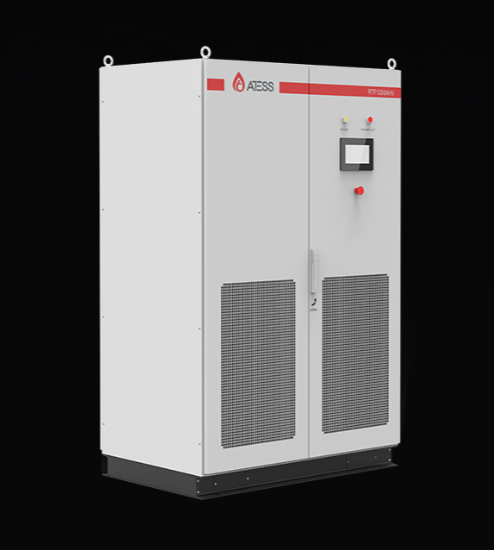
At ATESS, we provide the RTF1200AHV for large industrial applications that require AC-to-DC conversion. This product is designed as a modular rectifier cabinet with ATS integration and a two-in-one structure. It can work with the PCS1000-1500HV to form a DC coupling solution.
The product performs AC-to-DC conversion and supports flexible configuration for different project arrangements. Multiple units can be paralleled when the project requires greater system capacity. This gives engineering teams more options when planning larger installations.
The RTF1200AHV also uses a touchscreen LCD for system interaction. These features make it suitable for projects where operators need clear local control together with modular capacity planning. The actual configuration should still be selected according to the electrical design and operating requirements of the site.
What Engineers Should Review Before Selection
Power rating is only one part of equipment selection. Engineers should also check grid conditions, DC voltage requirements, battery specifications, protection design, communication interfaces, cooling conditions, and available installation space.
Integration with the PCS is especially important in DC-coupled energy storage systems. The equipment needs to work within the same electrical architecture, so voltage compatibility and control coordination should be reviewed during the design stage.
Future expansion also deserves attention. If a project may add storage capacity later, the initial layout should leave room for additional modules, cabling, protection equipment, and control integration. Early planning can reduce unnecessary changes during later upgrades.
Understanding the Role of Rectification in Power Systems
Rectification may look like a simple AC-to-DC conversion process, but its role becomes more important in large industrial energy systems. System voltage, control methods, protection design, and equipment coordination all influence how effectively the conversion stage supports the wider installation.
At ATESS, we approach rectification as one part of a complete power architecture rather than as a separate device. For project teams planning industrial storage or DC-coupled systems, understanding the conversion path first can make equipment selection, system integration, and future expansion easier to manage.